Tuesday, December 6, 2011

Explorers Changing Established Ways

In the 1500s a fever swept across Europe, a fever of exploration which would forever alter the way Europeans thought, causing them to question their established ways. Explorers such as Columbus, Pizarro, and Magellan courageously faced the unknown, battling stormy seas, risking starvation, and pioneered the way for future world exploration. During the Middle Ages, people believed the Earth was much smaller than it actually was and only the few educated people knew that the Earth was round. There was no knowledge of the Americas or the civilizations which existed there. The majority of knowledge was based on Roman and Greek scientists and philosophers as well as the Bible.  The discoveries of early explorers taught Europeans about the true size of the globe, world geography, and civilizations completely different from their own.

On October 12, 1492 Christopher Columbus, an Italian explorer, landed on the east shore of modern day Florida. However, Columbus did know he had stumbled upon a new continent so he named it the West Indies and named the people "Indians". Columbus was being funded by King Ferdinand and Queen Isabella of Spain to find a route west to Asia. Columbus believed that because the Earth is round, he could continue sailing west from Europe and he would reach Asia eventually. Little did he know, the continents of South America and North America formed a virtually impenetrable barrier. Columbus returned with gold, lumber, cocoa, and cinnamon. He believed that he had found a route to Asia but later explorers figured out that he had in fact discovered two new continent. Columbus drastically changed the way Europeans saw the word because they believed that Africa, Europe, and Asia were the only continents. This increase people's  knowlegde of the world and inspired future explorers such as Balboa, Cabot, and Cortes to explore the new land. They would bring back New World crops such as chili peppers, potatoes and corn as well as tales of the magnificant cultures 

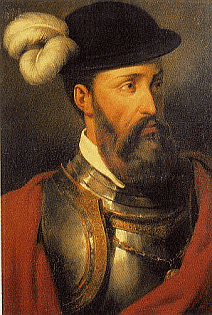
In 1536 Francisco Pizarro conquered the Incan empire, destroying their culture and enslaving the Inca people by forcing them to work in mines for the Spanish. In 1532 Pizarro arrived in the Inca city of Tumbez. The Incas were an advanced society with paved road systems, bridges, canals, gold work, and terrace farming. They did not view Pizarro and his horses and firearms as threat, yet Pizarro and his men killed the Inca ruler Atahualpa and sacked the major Inca cities. Pizarro changed the European view that the only advanced civilizations were in Europe and Asia. Europeans learned of cultures they had never come in contact with before. 


Ferdinand de Magellan, a Portuguese explorer of noble birth, made the immensely difficult journey around South America in 1521. He was the first to sail west across the Pacific Ocean which he named after the Latin word for peaceful. Magellan wanted to sail under South America to Asia. However, he did not realize how gigantic the Pacific Ocean. It took Magellan ninety-eight days to cross the Pacific; the majority of his crew died from starvation or scurvy. On March 16, 1521 Magellan and the remainder of his crew reached the Philippines. Even though Magellan died in battle with the natives, his crew returned to Spain, becoming the first to circumnavigate the globe. Circumnavigation proved that the Earth was round, not flat (a misconception held by the uneducated in the 1500s). Magellan's voyage across the Pacific displayed how large the planet Earth is. aiding cartographers.

Sunday, December 4, 2011

Top Five Motives of Exploration

What do you think were the top five motives for fifteenth and sixteenth-century Europeans went on voyages of exploration? Explain your answers. 


Trade- Before explorers discovered the New World, they were searching for a shorter route to Asia so that they could trade for spices. Spices were important in preserving food, adding flavor, perfume, and medicine. Prince Henry of Portugal spent many years redesigning ships, preparing maps, and training crew members so that eventually explorers could sail around Africa to Asia. His dream was realized in 1488 when Bartholomew sailed around the Cape of Good Hope. This enabled Vasco de Gama to make the same trip around Africa in 1497 to Calicut. In 1502 Vasco de Gamo made a treaty with the leader of Calicut and seized control of area around the Indian Ocean. A Portuguese trading empire developed. Another example of an explorer motivated by trade was Christopher Columbus who on August 3, 1492 sailed west from Spain to reach the East Indies. He had no idea that the Americas existed. Therefore, when he reached the Caribbean , he named the people he encountered, "Indians".
Conquest- Explorers such as Juan Rodrigez Cabrillo sailed to conquer new lands for their country. He sailed along the coast of modern day California, claiming land from San Diego to Oregon for Spain. Hernan Cortes, another Spanish explorers, overthrew the Aztec empire in 1519. Through conquest, explorers gained land for their country, prestige and awards, and riches. This motivated explorers to find new lands and conquer them.Countries such as Spain, France, Portugal, and England fought to gain territory and power. They endorsed explorers such as Pizarro and Cabot to claim lands, bring back riches, and enslave the native inhabitants. Pizarro, an Italian explorer, was successful in destroying the Inca empire. The gold from his expedition made Spain the richest country in Europe. The Inca people were forced to work in Spanish mines.


Christianity- Explorers spread the Christian faith through conversion of the native people. While Cabrillo did not personally convert the Native Americans of California, his discovery and exploration lead missionaries to later set up strict Christian missions. Magellan, whose sailors were the first to circumnavigate the world, baptized people of the Philippines by force and killed those who refused to become Christians. Today, the major religion of the Philippines is Catholicism. Another example of a European who spread the Christian faith is Francis Xavier. While he is not strictly an explorer, Xavier journeyed through India, Japan, and Indonesia where he set up convents and monasteries. In 1547-1529 Xavier converted 300,000 Japanese people to Christianity. However, the Japanese banned missionaries in 1550 along with the Jesuits so Xavier's efforts were fruitful in converting the Japanese.


Curiosity- It was one of the Renaissance ideals which lead explorers to discover new lands or routes. The Renaissance was a period of rebirth and return to classical ideals. Scholars around the world were studying the classics of Aristotle and Plato. People became more interested in secular subjects such as the humanities and human achievement. Meanwhile, the Scientific Revolution started in the 1500s; it was a shift in scientific thinking which stated that mathematical laws governed the universe. Both the Renaissance and Scientific Revolution were drastic changes which influenced the way people, such as explorers, saw the world around themselves. They inspired explorers to investigate the globe and broaden their horizons. Through the Renaissance, Scientific Revolution, and explorers the world became a much larger place, not limited by Medieval thinking.

Mapping-When explores began sailing the seas in late 1400s they quickly realized that their maps were inaccurate; maps did not even have the Americas. In 1499, Amerigo Vespuci discovered Brazil; later, a German cartographer read Vespuci's journals and named America after Vespuci. Using tools such as the astrolabe and portable compass, cartographers and explorers were able to more accurately describe the world.


Monday, November 28, 2011

Scientific Revolution Quotes

"Our scientific power has outrun our spiritual power. We have guided missiles and misguided men"
- Martin Luther King Jr.  

This quote was given by Martin Luther King Jr, a civil rights activist and clergyman during the 1960s in American. He spoke out against racial inequality, violence, and poverty through his many speeches and protests. What King wants to illustrate through this quote is that we must be moral and ethical and not get blinded by our scientific advancements. King was speaking out against the Vietnam war and the invention of missiles which had ability to kill thousands from a distance. Another example would be atomic bomb. On August 6, 1945, an atomic dropped over Hiroshima, Japan killed 90,000 to 160,000 people and wounded countless numbers of men, women, and children. Scientists worked for years to successfully create nuclear fission. However, they ended up creating a bomb which killed thousands. Martin Luther King Jr. is warning us not to advance with science and forget our morals. The scientific power he is speaking about is inventions and the spiritual power is not necessarily religious but also moral and ethical. When he says "we have misguided men" he is referring to the fact that we have become blinded by our achievements and we are forgetting human principles. 


I agree with Martin Luther King Jr.'s quote; I believe that before we advance in science we should always take into consideration the risks and long term affects. In a society where the latest, newest piece of technology is valued, we need to take a step back and examine the consequences objectively. 

Tuesday, November 15, 2011

Scientific Method


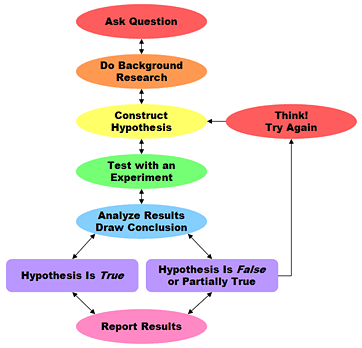
The scientific method is a process by which scientists try to determine a cause and effect relationship using experimentation. Scientists today continue to use the scientific method as a way to answer questions about the natural world. The scientific method is an organized, logical sequence of steps that enables scientists to validate or disprove their hypothesis by experimenting, collecting and analyzing data, and then drawing conclusions. Before beginning, scientists state the problem. Then they gather background information on the problem. After learning about what they will study, scientists make an educated guess about what the results will be, also called a hypothesis. During the experimentation step, scientists accurately record data and observations. Then they analyse and draw conclusions about the data. Was their hypothesis correct? Scientists often repeat their experiment by formulating better a  hypothesis of confirming their old one. The scientific method is still used today because it ensures accurate and unbiased tests which enable scientists to answer questions about the natural world or make new discoveries. 

Monday, October 31, 2011

Martin Luther was a Hero

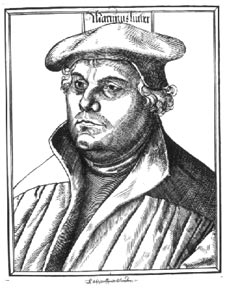
Exactly 494 years ago, on October 31, 1517, Martin Luther pinned his 95 Theses to the door to the church in Wittenburg, Germany. Little did he know, his declaration against the sale of indulgences would ignite a revolution that divided the Christian faith. Martin Luther was an Augustinian monk who, initially, was a devout Catholic. He whipped himself and slept in the snow in penance for his sins. In order to console the distraught Luther, he was made professor of theology at the University of Wittenburg. After reading the works of St. Peter, Luther came to realize that God was not vengeful and harsh but loving and forgiving. Meanwhile in Rome, Pope Leo X needed money to fund St. Peter's Basilica. He enlisted the help of Johan Tetzel to preach about purchasing indulgences, a document which granted forgiveness for all sins committed and those that will be committed and exemption from Purgatory. When his pupils began buying the indulgences, cried out against the corruption of the indulgences saying in Thesis 86: Why does not the pope, whose wealth is to-day greater than the riches of the richest, build just this one church of St. Peter with his own money, rather than with the money of poor believers? Luther acts of retaliation resulted in his excommunication and banishment, yet he was true hero for translating the Bible, retaliating against the corrupt Church, and allowing people to interpret the Bible their own way. 


Luther translated the Bible into German in 1522, enabling people the common people, who did not understand Latin, to read Scripture. This gave them a personal relationship with God, rather than relying on priests to tell them what the Bible says. The common people were empowered because the Church could no longer use people's ignorance of the Bible to their advantage. Luther's translation of the Bible into German vernacular was the not the first, but it was the most successful.  He studied the way Germans in the streets talked and used their words so that the Bible was comprehensible to commoners. Luther's Bible unified the German language.With the help of the printing press, Luther's Bible spread through out Germany. This influenced the the translation of the Bible into other vernaculars such as English, (The King James Bible of 1611) and even translations in Scandinavia and the Netherlands. 


Martin Luther's reforms allowed the people to have a personal relationship with religion. Today there are numerous branches of Christianity, from Methodist to Baptist to Coptic. Before Martin Luther, there was only Eastern Orthodox and Roman Catholic. He argued that there was no need for priests and sacraments, and that your own relationship with God would give you salvation. This expanded freedom of thought contributed to the scientific revolutions of the 17th and 18th centuries. 


Martin Luther fought against the sale of indulgences, simony, and the extravagance of the Roman Catholic Church.  The Church used indulgences, pieces of paper which forgave sins, as means to fund their own building projects and wealthy life style. Pope Leo X used the Church's money for his own purposes and then raised more money for St. Peter's Basilica with the common people's indulgences money. Simony was the sale of positions, rich people could buy positions in the clergy. Pope Leo X was not even a priest when he was elected, his father bought his cardinal-ship from the Pope. Martin Luther brought to light the Church abuses through his writing. During the Cathalic Reformation, the Roman Catholic Church retaliated against the Protestant Reformation by banning indulgences and simony. Not only did Luther establish a new religion, but he also reformed the Church. 

Wednesday, October 12, 2011

Martin Luther vs. Johan Tetzel

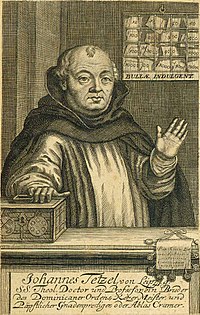
In 1517, a Dominican friar by the name Johann Tetzel was sent by Pope Leo X to preach about the sale of indulgences in order to raise money for Saint Peter's Basilica in Rome. This outrages Martin Luther, an Augustinian monk, who wrote the 95 Theses about why the sale of indulgences was corrupt and immoral. His writings was the spark that lit the bonfire of revolution across Europe. Not only did Luther and Tetzel differ on their views of the sale of indulgences but their ideas of God were very different.

Johann Tetzel, and Catholics at the time, saw God as being judgement and harsh. You are doomed no matter what you do because it is human nature to sin Tetzel warns by saying that "they are well-nigh numberless, and those that commit them must needs suffer endless punishment in the burning pains of Purgatory" (Tetzel, The Spark of Reformation: Indulgences).  He goes on by saying that  "for each and every mortal sin it is necessary to undergo seven years of penitence in this life or in Purgatory" (Tetzel, The Spark of Reformation: Indulgences).  In essence, Tetzel is preaching that sins are inevitable and God is going to punish you with 7 years in purgatory for each one. This paints a picture of God who is very judgmental and it inspires fear rather than love in the people. How could someone love a God who is going to punish them dearly for every sin they ever commit? By utilizing people's fear of Purgatory and their wish for salvation, the Church was able to manipulate the people into paying for indulgences that fund the Church's own extravagances.

Martin Luther and the Protestants viewed a loving God and that "to behold God in faith that you should look upon His fatherly, friendly heart, in which there is no anger nor ungraciousness" (Luther, Justification by Faith).  At first, Luther saw God as being "just and deals justly in punishing the unjust" (Luther, Justification by Faith). However, after reading Paul's Epistle to the Romans, he came to realize that God granted graciousness and mercy if you are simply faithful. He says that "faith leads you in and opens up God's heart and will, that you should see pure grace and overflowing love" (Luther, Justification by Faith).
Luther is saying that God will love you if you faithful that is the key to salvation, not committing "good acts" such as donating to the Church.

Sunday, October 2, 2011

"Blood Alone Moves the Wheels of History"

This quote, by the German monk and professor of theology, Martin Luther, states that to cause great reformation and change there must also be sacrifice and bloodshed. He was a religious reformer during the 16th century who split the Roman Catholic Church . Luther's religious reformation caused thousands to be killed during warfare or burnt at stake for their beliefs. What Luther means to imply is that great change will always have those opposed to it and we must fight for change for it to be successful. The term blood in his quote refers to the loss of human lives and warfare. One modern example of Luther's quote would be the Arab Spring this past summer and spring. Protesters were brutally killed by the police as they called for the end of government regimes. It started with a Tunisian man burning himself in protest of police corruption. This set off a wave of unrest across Algeria, Egypt, Jordan, and Yemen. One could argue that the violence was the sole successful method of overthrowing corrupt regimes.

Personally, I disagree with this quote. Yes, violence and wars are one way to ensure reform but they are not the only methods. There are plenty of examples of huge changes in history such as the industrial revolution and the digital revolution. No blood was shed over the invention of computers and the progress of the internet into a digital world. Wars have shaped history and made the world the way it is today. America is no longer a British colony because of the American Revolution in 1775. Yet one example of a bloodless revolution was the printing press which allowed books to be made quickly and cheaply, resulting in education and the spread of ideas. Books are still a huge part of our culture today. If I were to revise this quote I would say "Blood and Innovation Move the Wheels of History". 

Wednesday, September 28, 2011

The Sale of Grade Points (ISB Indulgences)

Today, during Humanities class Ms. Moore offered to raise our grades one level for 1000 dinars. We could purchase small pieces of paper with her signature, validating the offer. It could be cashed in at any time. I was shocked when I heard this. I was wary because it sounded too good to be true. As I thought about it, I realized it was very corrupt even if it was supposed to help fund the school. The school can get money other ways rather than bribing students to raise their grades. After a while, I realized that her offer was fake and it was just a learning activity. However, if it had been real I would not have minded paying when necessary.

Honestly, the school should never get students to pay for their grades. It is unfair to students who work hard but are less wealthy than others. Grades should be a measure of how much you work not the amount of money you are willing to spend on them. It also does not give students an incentive to work if they know they can just pay for a better grade later. It is not fair for students who work hard to receive the same grade as someone who paid for their score. Teaching us that bribery is the way to succeed in life is not morally just.

This learning activity was giving an example of the indulgences that the Church gave out so that people could "pay off their sins". It was a corrupt way for the Church to gain money and satisfy the common people's fear and guilt over the actions they commitied so that they could get into heaven. By purchasing an indulgence, some or all of the punishment a person would receive after death for their sins was gone.

In this case, Ms. Moore was the Church, instead of determining our religious fate she controls our grades. The "indulgences" were little slips of paper with her signature. In the beginning, the Pope signed all indulgences. Our class was the common people who wanted better grades instead of salvation. We had to pay to recive an indulgence like people who followed the Medieval Church. While it might of seemed corrupt, we really wanted the indulgences and were willing to pay a lot for them. 

Thursday, September 22, 2011

"All the world's a stage" - William Shakespeare

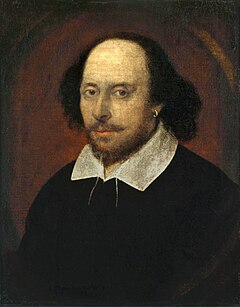
This quote by William Shakespeare, the renown playwright, is about the mortality of life. It is the opening line from a monologue by the character Jaques in the play As You Like It.  Shakespeare describes the various stages in life, comparing people to actors with "their exits and their entrances; And one man in his time plays many parts,". He compares the world to one huge stage, with everyone being actors who have their own short time in the limelight. Everyone has their part to play. Our first role is as an infant, then child, lover, soldier, justice, old age, and finally senility and death.


I personally agree with this quote. At first I did not understand what it meant; I thought he was saying we are all lying to each other through our scripted words. After I thought about the quote, it began to make sense. Shakespeare is comparing our short existence to filled with the different stages of life to being an actor. There are various ways to interpret this quote. One idea is while we think we are living unique, special lives we are actually just scripted by fate like the rest of the world. I disagree with this theory because I believe our actions are of our own decision not decided by some higher being. Shakespeare is also trying to say thatno matter how amazing or famous you are, your time will come to exit the stage of life. One example would be William Shakespeare himself. He contributed enormously to literature, the English language, and common phrases of today. We still say "All the world's a stage." Yet he too had his lifetime and his death. William Shakespeare's quote is an eloquent way to remark on the cycle of life and our place in the world.


Tuesday, September 6, 2011

Machiavelli- The Prince

"The end justifies the means" - Machiavelli The Prince


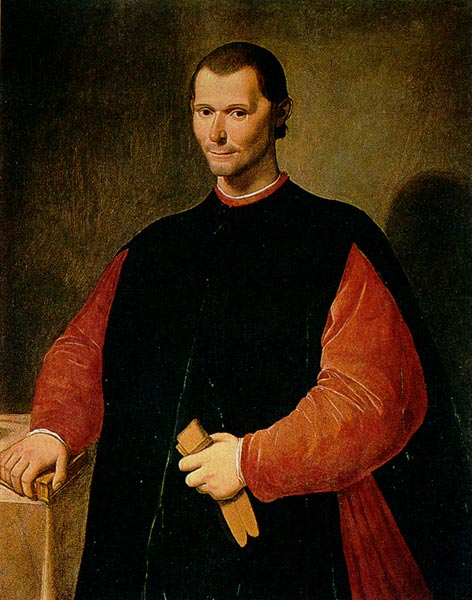
This quote by the famous Italian, Renaissance politician and author Machiavelli wmeans that as long as your efforts have the desired outcome, you can ignore the corrupt or treacherous ways you reached your goal. The end result determines the morality of one's actions. For example if you lied and cheated your way to power, it would be acceptable because you reached your ideal result. Despite the fact you back-stabbed your friends, you rose to power. Another way to look at it would be in animal testing. No matter how many chimpanzees a company had to mutilate, in the end it came up with a safe antibiotic. Machiavelli's quote would justify all the pain and suffering of the animals because the result was a drug that helped humans. He is saying that morally wrong actions are sometimes necessary for the right outcome. Machiavelli lived in a time of tumultous Italian politics. There was constant fighting for power among city-states and Pope.  He wrote The Prince  as a guide for rulers to gain and maintain power. While his book was very cynical and controversial, it was realistic. Unlike previous political scholars, such as Plato and Aristotle, Machiavelli did not write about ruling in the ideal society.

I disagree with Machiavelli's philosophy because it is immoral, selfish, and potentially harmful . Morally, how is it right to harm others, lie, and cheat for personal gain? The outcome of your actions cannot excuse your actions to begin with. Your actions are what they are, harmless or not, and the end result does not change that. If you bomb civilians to kill a terrorist, you still killed innocent civilians. The fact that you killed a terrorist does not excuse the death of other bystanders. While the motive should always be examined before judging someone based on their actions it should not exempt them from consequences. In certain cases such as a woman stealing bread for her children, the end does somewhat justify the means. Stealing to provide food for children  is preferable to children dying from starvation. Yet once people start doing anything for a "good cause" it comes into question exactly what is the "good cause" and is it merely personal gain? To truly maintain  a moral society, the end cannot justify the means. The means and the end must both be examined fairly. 

Sunday, September 4, 2011

Castiglione: The Courtier

 "Outer Beauty is the true sign of inner goodness." - Castiglione, The Courtier
The author is trying to imply that superficial beauty on the outside is a sign of being a kind, compassionate, exemplary person.  He is saying that to know whether someone is a good person you should judge them on there appearance. There was a movement in the Renaissance to match facial features with personality. However I completely disagree with this quote. The most beautiful people are not always the kindest or the most noble. Mother Teresa dedicated her life to helping the poor, miserable people in Calcutta. She set up schools and started "The Missionaries of Charity" to care for people no one was looking after.  Even though Mother Teresa was not the most pretty on the outside, she is considered the epitome of dedication to others. People tend to judge other by their how they look but in reality your actions and words are the real signs of character. Having the most luscious, beautiful hair does not tell me if you are a good person. 

Wednesday, August 31, 2011

Renaissance Man

A Renaissance man  "is a cultured man who is knowledgeable,educated, or proficient in a wide range of fields". An example of a Renaissance man would be Leonardo da Vinci. Not only was he a master artist, he painted the Mona Lisa, but da Vinci was also designed flying machines, architecture, studied anatomy, and sang. He was only one of the many Renaissance men who spent their lives mastering a variety of subjects. Michelangelo, Raphael, and Dante are a few examples. The ideal Renaissance man would posses curiosity for the world around him, this would compel him to try new subjects. He would be disciplined and dedicate his time to mastering the skill. Yet he would also be creative in looking at problems from different angles. Designing, painting, and writing all take creativity. Finally, a Renaissance man would be interested in humanism not only religion. Instead of only focusing on God like they did in the Middle Ages, a Renaissance Man would care about human achievement. That would drive him to master the variety of subjects. His devotion to learning would reflect people and the world around him. 


Renaissance men did not emerge until the 1500s because of the mindset and conditions during the Middle Ages. Disease, warfare, and anarchy were widely prevalent, so people put their faith in God that life would be better after death. The Church had a huge impact on everyone's daily lives. It presided over births, deaths, and marriages   Monasteries were the only centers of enlightenment; often monks were the only people who could read. During the Renaissance Church still played a role in people's lives but there was a shift called humanism. This focused on personal achievements and the tangible world. Old texts that the monks had preserved from Greek and Roman times were read again. It was a revival of the classics. With trade and city-states there was enough money to pay artists, philosophers, and poets. Trade with the Middle East brought in new information on technology and science. With money and education it was possible to be a Renaissance man. 

Why do we Study History?

History is the record of past events, cultures, ideas, and places. It is the accumulation of knowledge and evidence from the past that forms the historical record. History is part of our identity, our cultural background that influences our daily lives. "The function off the historian is neither to love the past nor to emancipate himself from the past, but to master and understand it as the key to the understanding of the present."E. H. Carr 


What E.H. Carr, author of What is History? is trying to tell us is that no matter if you love or hate history, it is a necessary tool to understanding the world around us today. History aids us in understanding each other and our differences. By understanding and analyzing the history those different from you, you overcome ignorance and prejudice. Instead of thinking that all Chinese have bound feet, after learning the history of Ancient China you learn that it was a tradition practiced among the elite before it was outlawed by Communism. Without full understanding of one another and our history there is bias and conflict.  By learning history you improve your research skills, your ability to predict and see trends, as well as your thinking skills. 


Not only does history improve your understanding of people around you, but it gives meaning to the world. The present is meaningless without the past. History explains why everything right now is the way it is. It enriches your  knowledge of current events and entertainment. Literature and the media constantly make small references to events or things of the past. Without knowledge of history these details would wash over you. After learning about the Ancient Greeks in Humanities I suddenly noticed all these ways Ancient Greece affects us today, everything from democracy to columns to medicine. I watched modern movies and understood the references to Greek gods. 

Monday, August 29, 2011

Who was the Real Shakespeare?


Shakespeare, the renowned playwright, poet, and legend is immortalized in his 37 plays and 154 sonnets. No other author has shaped our culture and language like William Shakespeare. Clichés like “in one fell swoop” or “not a mouse stirring” are so common place in conversation or literature that often we do not realize we are uttering Shakespeare’s own words. He changed around the English language to give us the words such as lackluster, madcap, obscene, and multitudes of others. Shakespeare’s characters are mirrors of human nature. From the ridiculous personas of Bottom the Weaver to the incomparable King Lear, Shakespeare has enriched the literary world with personalities that are emulated in multitudes of stories and movies. Yet, despite the enormous impact that Shakespeare has on the modern world, historians question the true authorship of Shakespeare’s works. Evidence from the historical record of clearly establishes that William Shakespeare was no pseudonym or imposter.


To begin with, the name “William Shakespeare” appears on plays and poems attributed to him. William Shakespeare was also an actor at the Globe Theatre and a part owner of the Globe. While some of his early works such as Romeo and Juliet were not published with his name, only a third of the plays published in the 1590s named an author. Plays were not considered proper literature so people did not pay attention to the authors until the 1600s. The First Folio, a collection of Shakespeare’s plays published in 1623, names the collection "The Works of William Shakespeare". There is no historical evidence with any suspicion over who the true author of Shakespeare’s plays was or whether “William Shakespeare” was a pseudonym.


Despite his low birth, events in William Shakespeare’s live clearly point to the fact that he was the true author his plays and sonnets. There are no specific records about Shakespeare’s education but reasonable assumptions can be made from the information available. He attended “petty school” for the basics in reading, writing, and arithmetic. Two years later Shakespeare went to the King Edward IV Grammar School from the ages of seven to fourteen. This would have given him grounding in Latin, Greek, writing, rhetoric and logic. At a young age William Shakespeare began his career as an actor. This would have given him a basis for playwriting because he was already acting in them. Shakespeare later became the father of the twins Hamlet and Judith. The play Hamlet was commemorating his dead son. Numerous passages have the phrase “Farewell, my blessing”. Why would anyone other than Shakespeare write a play about his son? Historians argue about the descriptive references to Italy, a place Shakespeare had never visited. Could he have possible traveled there during the “Lost Years”, ten years where his whereabouts are unknown? 

Thursday, May 19, 2011

King Henry VIII

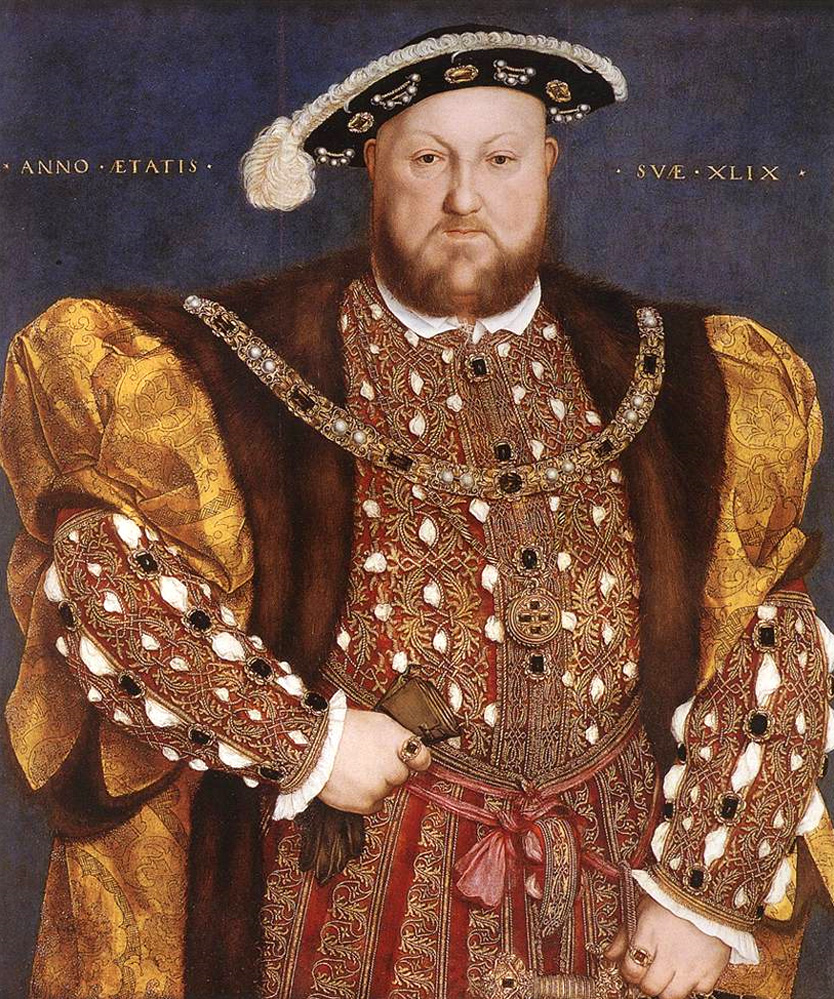
Born the 28th of June, 1491, King Henry VIII became famous for his six wives, cruelty, and separation from the Church of England. He was handsome and charismatic as a young man. Besides being a powerful king he was also an author and composer. He married six times in hope of conceiving a son. Finally, he had Edward, a sickly boy. King Henry split from the Catholic Church after they would not allow him to remarry from Queen Katherine (his first wife). He reformed England and was excommunicated from Rome. In later life he became diseased and obese. 

Crusades

"You common people who have been miserable sinners, become soldiers of Christ! You nobles do no quarrel with one another. Use your arms in a just war! Labor for everlasting reward."
                                     - Pope Urban II 

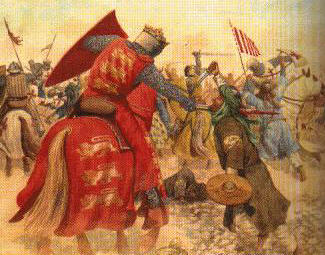
The crusades were military expeditions to reconquer the Holy Land, birthplace and home of Jesus. For 200 years, Christian soldiers and knights were sent to the Middle East. They were called crusaders because of the cross they bore on their shields and shirts. Crusaders fought in the name of God, under orders of Pope Urban II.  Why were they fighting? 

There were multiple reasons why Pope Urban II ordered an attack on the Holy Land. Pilgrims, from peasants to nobility, had been traveling there for centuries. Arab Muslims had been in control and were moderately welcoming to pilgrims. Then, in 1000 AD the Turks took over. The Turks started to attack pilgrims; finally, they closed the pilgrimage group. The Byzantine Emperor asked Pope Urban II for help against the invading Turks who were attacking his Christian Empire. Pope Urban II accepted, not only so the holy land would be under control of the Christians but also to unite the Christians against the Muslims. Lately, lords had been hiring armies of knights left over from the Viking times. The lords would go to battle against one another by attacking the opposing lord's peasants. If the Crusades succeeded Pope Urban II would gain political power as well. The Christians would also gain control of major trade routes to Asia and Africa. 
In the end, the Christians did not recapture the Holy Land for long. However, the Crusades enriched and and  brought many lasting changes to Europe. After the Crusades, soldiers brought back precious stones, rugs, jewelry, and spices back with them. Soon everyone wanted some of these riches. This increased trade between the Middle East and Europe. It also increased the use of money because it became more practical than barter. New techniques and ideas from the Middle East such as mathematics, medicine, and the sciences. The Crusades helped bring Europe out of the Dark Ages. 

Wednesday, May 18, 2011

Feudalism and the Manor System

After the fall of Charlemagne, the empire began to fall apart. The was increasing threats from Vikings and waring kingdoms. Feudalism was set up as a way to protect people. Kings of lords would own the land but vassals held land; in return the lords or kings got their vassal's loyalty. Lords would protect their vassals  and protect their lands. If a vassal died then their child would be protected by the lord. A lord asked of his vassal's advice before going off to war. Vassals were knights, men who revived honor and land in exchange for serving the lord as a soldier. They were responsible  for raising and leading an army, paid taxes in crops, and appeared in court when summoned. Feudalism was a way of organizing a government in the Middle Ages.

The Manor system was a way of organizing the economy during the Middle Ages. It consisted of lords and their manors. The lords were usually vassals for a king or more powerful lord. A lord ruled over his manor, collected taxes, was the judge, and oversaw all work done in his fief. Manors were far away each other so that meant they had to be self sufficient. They made their own food, clothings, and other materials. Noblewomen also played an important role in the manor system. Noblewomen were expected to manage the household, medical needs, and supervise servants. When the lord was away she served as the lord of the manor.

Not everyone everyone was a lord or lady; in fact, most of the population was peasants. Peasants were often tied to a certain manor, that was when they were known as serfs. Serfs were poor farmers who had to farm the lands in the manor. They were only given a small strip of land for themselves and still had to pay taxes from it. Serfs were slaves but they still were not free. They could not leave the manor or marry without the lord's permission. Men, women, and children all had to work. However, they could buy their freedom or escape from the manor. The peasants had such a harsh and short life that it surely influence their hope in a magnificent heaven. All to often children would die so they wanted to believe that everything was going to be alright. They might have had a connection to Jesus because he was peasant like them.

Thursday, May 12, 2011

Charlemagne

Додајте натпис

In 788 AD, Charlemagne was crowned King of the Franks. His rein of 50 years completely transformed Medieval Europe. Charlemagne conquered weaker kingdoms, expanding his land to the biggest kingdom since the Roman Empire. This spread the Christian religion throughout Europe.  He set up schools to promote learning and culture. In a time when only monks could read, Charlemagne took the time to learn. To strengthen the economy, he issued money. 


Renaissance Reflection


On Tuesday, May 10th all of 8th grade starred in a Renaissance Faire. It was a collaboration between Art, English, Humanities, and Design Technology.  In English class we learned parts from Shakespeare’s A Midsummer Night’s Dream. For humanities we have started the Middle Ages and plan to do a unit on the Renaissance. Ms. Moore also organized the costumes. In art we learned about 1-point perspective while drawing the hallway of a museum filled with artwork from Leonardo da Vinci and Michelangelo. Ms. Jovovic read to us about both of the great artists. In Design Technology we built inventions that da Vinci himself designed. Finally, for Performing Arts we learned to play musical compositions on the recorder from the time.

The Renaissance Faire was a ton of work but in the end it was all worth it. We danced, acted, and played the recorder. My parents really enjoyed it. I think the most difficult was the Shakespeare. It was challenging to memorize all of the complex lines as well as  speaking with full volume. If I were to go back and do this project again I would spend more time rehearsing for better facial expressions, projection, and blocking. I do not believe we had enough guidance on the acting. The main focus was the dancing. We learned three dances in total. We were best at dancing. However, the last dance was confusing so we made the most mistakes. Sometimes we would end up without a partner so we would have to dance with someone of the same gender or bow to the center.

In Design Technology  Leda and I made a replica helicopter of a design Da Vinci drew. It was meant to fly upwards but our materials were too heavy. It simply twirled while falling. I learned a great deal about Leonardo da Vinci doing this project. His inventions, which were way ahead of his time, fascinate me especially his “robot”. Due to a combination of absenseses and lack of practice our recorder performance was not at its best. Bakic, Anze, and I had to perform one song alone because the rest of the class was not ready. If we were to do this again maybe we could figure out a way to improve.  Overall, I really enjoyed the Renaissance Faire, we put it a lot of effort and did a great job.

Sunday, April 17, 2011

Mini Lessons

Our class taught each other about different aspects of the Muslim Empire. Here is a summary in brief the main points of each lesson.


Conquests of Muslim Empire
Marshal

The conquests of the Muslim Empire from 651 to 732 AD spanned from Spain to Egypt, across the Arabian peninsula, and into parts of modern day Russia. The conquests expanded the religion and culture. This united the people, expanding the population and the army. The Muslims got taxation from the non-Muslims.

Achievements of Islam
Johanna

The ancient Islamic culture continues to affect us today through their many achievements in math, science, technology, and architecture. They spread their own philosophy as well as maintaining the philosophies of Plato and Aristotle. They built complex irrigation systems that they used in the harsh desert. The Muslims even discovered the first painkillers.

Geography
Connor  and Ilija

The harsh desert, arid climate, and lack of water all contributed to the development of trade, architecture, and fashion in the Muslim world. The lack of water meant people were nomadic in the beginning. They soon learned how to use irrigation. People were dependent on foreign trade for food and goods they could not get elsewhere. Their housing was build out of mud and stone. Their clothing was loose and airy.

Islamic Extremists
Leda

Terrorists attack other countries to force their beliefs on them or ruin that countries' culture. Al Queda is one example of a terrorist group. They are responsible for 9/11 attacks on the World Trade Center and the Pentagon. Not all Islamic people are terrorists, only a tiny segment. One should not judge people based on their few extremists.

Achievements of Muslims
Anze


Math, technology and medicine were three areas that the Islamic people excelled in during the Golden Age of Islam. They developed algebra, fountain pens, and cough syrup to name a few of their marvels.

Golden Age of Islam
Luka B.

Geography, trade, and religion all affected and led up to the Golden Age of Islam. Trade brought in material goods and ideas from far reaches of the world. The Arabian Peninsula is centrally located between Europe and Asia allowing easy trade. Their religion united them against their enemies. They had one belief system and language.

Women of Islam


14 centuries after the Quran, the rights of women in Islam have changed and evolved for better and for worst. Muhammad advocated for women's rights and protected them through the Qu'ran. He decreed that the killing of baby girls was immoral and that women have the right to education and property. However, he only granted women one half of the rights of men in property and courts. Over time, the rights and roles of women have been manipulated and warped by men in power. In Saudi Arabia women cannot drive, vote, or reveal themselves. They forced to wear black head to toe. Rights for women in Islamic nation varies from country to country. In Turkey, women can vote and chose to cover themselves. There are, however, shocking treatments of women such as, honor killings, stoning, female circumcision, that continue to exist today. Women's rights in Islam have changed yet they remain a driving influence in society.


Wednesday, March 23, 2011

The Importance of Geography and Trade in the Muslim Empire

Hot desert air whips your face. Sand lashes at you, scratching your uncovered face. An burning sun looms above your head. All you long for is shade and water. Over the sand dooms you spot a tower. Excited, you urge your camel onwards. A relived sigh escapes your lips. The magnificent city of Baghdad is spread below you.

The Islamic Empire grew and thrived despite the adverse climate and geography. The great achievements and cultural advancements were shaped by the landscape and trade. Trade from Mediterranean, Syria, and Yemen brought in a wealth of ideas and products. Caravans transported perfume, spice, incense, silk, gold, ivory, and many more luxuries. The growth of the Muslim Empire, the spread of Islam, and the achievements of the Golden Age were all impacted by trade and geography.

Not only did wars expand the Muslim Empire, but climate and wars affected development. Harsh climate negatively impacted empire. The desert land made sustainable farming impossible so groups of nomindiaadic people called Bedouin would travel from oasis to oasis with their livestock. This meant necessary food had to be gotten from imports. That negatively impacts the amount of people able to survive on foreign grain. There was not enough fertile land with adequate water supplies for many people to live on.  Transportation was limited to desert travel or sea voyages. Despite these setbacks, major trading centres such as Mecca and Baghdad formed. This was because of their ideal location, close to the Mediterranean, Central Asia, and India. A cross roads of trade routes formed, bringing in new people and ideas.

The spread of Islam was affected by both the trade and the geography of the region. Trade brought in more people who were exposed to the Islamic faith. Access to different areas such as the Mediterranean and India made it easier for conquering armies to convert surrounding neighbors. Visiting tradesmen gained new knowledge about Islam. Muslim armies traveling to foreign lands would convert the citizens into Muslims. In the begining of the 6th century, very few people accepted the Muslim faith. But by 661, it had spread through the entire Arabian Peninsula. In 1180, North Africa, Spain, Persia, and up to the border of India had been converted! Islam united these people under one faith, strengthening the empire.

 During the Golden Age (800-1100), the Muslim Empire's achievements exceeded that of Mideval Europe's. They had great leaps in math, science, literature, and the arts. Instead of disregarding the knowledge of other civilizations they learned to learn from the generations before them and the surrounding cultures. Their trade with Europe and the rest of Asia brought in new ideas and concepts they could build upon. For example, they studied the Indian concept of "0" and created algebra which is today used in chemistry, physics, and medicine. Often called "Arabic numerals" the numbers we use today are really of Indian origin. Poetry was as popular and esteemed as modern pop music. Sufis used it to teach their beliefs that one should live simply and pray to get close to God. Their ideals spread as far as Asia, India, and sub-Sahara Africa.

Trade and geography were major factors that affected the Golden Age, expansion, and development. It shaped the Muslim faith we know today. 

Tuesday, March 15, 2011

Bedouin Poems

Camel
A hot sun scorches the desert scene
Sunlight burns my sandy hind,
Hills of sand shine with golden sheen
A constant thirst plagues my mind.

Yet I toil day after day,
with packs of incense, gold, and spice,
only to waste my life away,
hauling goods for dirty men with lice.

All I long for is water and shade,
under the cool oasis palm,
instead of this never-ending trade,
living without calm.

Wednesday, February 16, 2011

Unit Reflection

Thousands of years ago, a mighty empire ruled the Meditterean Sea. A bustling trade center, briming with culture, Constantinople was the capitol city of the Byzantine Empire. While most of Europe lived in improvished farms, the Byzantine Empire was a becon of civilization. Even though it fell over 500 years ago, we are continually affected by the great achivements of the Byzantiums.

The Eastern Orthodox church was founded in Constantinople. Today, it has roughly 228 million followers.  Eastern Orthodox churches are famous for their intricately beautiful mosaics rather than paintings. The tradition of mosaics on the walls, cealings, and floors of mosaics was started in Constantinnople (modern Istanbul). Haigh Sophia, one of the most famous chruches of all time, is adorned with lavish mosaics.  Emperor Justinian ordered the construction of the Haiga Sophia to be a monument to god. The architecture (domes, arches, etc.) was copied in the Vatican and countless other chruches. Even after it was converted to a Mosc then a muesem tourists still marvel at the beauty. St. Petka's, an Eastern Orthodox chruch in Serbia may be modern but the mosaics are done in the classic style dating thousands of years ago to Constantinople.

Laws are the fundamentle tools for ruling a country. Without them, our world would be in chaos. Justininan and Teadora, empeor and empress of Constantinople devised the Justinian Law Code which Western countries continue to follow today. Divided into six parts, the law code outlined Justinina's own laws, laws of the past, and judicial ruling. Judicial ruling meant judges can create new laws on a case by case system. Laws of the past were created before the Byzantine Empire; they could not be changed. The Justinian Law Codes made laws easy access. There were no longer debates over forgotten laws or changed ones.

The Byzantine Empire continually affects today, though we may not notice it. Laws and religion are two examples of the influences.

Sunday, February 6, 2011

Christian Symbol Mosaic

My Christian symbol mosaic is the Vatican Keys. They symbolize the power and supremacy of the Vatican Church. According to the Bible, the Keys to Heaven were given to St.Peter by Jesus. Popes are considered the descendants of St.Peter. One key was gold to symbolize the spiritual supremacy; one was silver to represent worldly power.  The  Every pope has their own, unique crest but each has with the keys. The keys are positioned like St. Andrew's Cross. 

Wednesday, February 2, 2011

St. Petka Chapel Mosaic

Today, our humanities class visited the St. Petka Chapel at Kalemegdan Fortress. Stunning, East Orthodox mosaics covered every inch of the walls. They depicted Biblical scenes from the life of Christ. Brilliant colors and patterns made this dark little chapel come to life. Of the many mosaics , I chose to sketch the one opposite the door. I decided that because you see it as soon as you enter it must be important. Three angles were huddled around a table. (They had golden halos and wings so they must be holy.)  A cup of wine and bread rest on the table. They represent the blood and body of Christ. The tallest angel (in purple) was carrying a staff with a cross. I believe this is what priests or popes carry. His eyes were brown unlike that of the surrounding angels. The angel to the left was clothed in green. Both his hands were raised in symbolic gesture. The right angel in blue had in his hand to his heart. Beside the table to the left was basin on a marble pedestal. It was full to the brim with water, suggesting that it was  Baptismal. On the right was a bowl of fruit, maybe apricots. There was a dagger beside the bowl. I believe this represents the triumphs of Jesus's life along with his brutal end. White buildings loom in the background.

This mosaic follows many of the Metropolitan Museum of Art rules. There is a focus on human figures, the angels. While they are not in frontal view, they are turned in meaningful gesture towards each other. One does not see the feet as they are sitting down around a table. All of the items on and around the table are symbolic to the life of Christ. The tallest angel is overlapped by the other two but I believe it is the most important. There are three angels so they may represent the trinity. The tall purple angel is the Father because he is the tallest and carries a staff. Purple is the color of royalty. Overlapping the purple angel is a green angel. He is the Son. I think this because in icons I have seen of Jesus he has the same hand gestures. The blue angel is the Holy Spirit. His hand is at his heart signifying that God comes from within.

The mosaic is a balanced composition. There are three angels with two on either side of a taller one.  Two pedestals rest on each side of the table. The art itself is linear not done by shading but with strips of color. You can see this especially in the folds of the robe. However, there is a natural setting, Instead of plain background color there are buildings and a curtain. Strong brilliant colors characterize this mosaic but there are no patterns. There is no real action in the mosaic. It seems like the angels are just having a conversation.

While this mosaic does not have all of the typical characteristics of Byzantine art it is a very good example. It is symbolic and the message is quite clear. Overlapping and size importance is visible. Overall, I really enjoyed this experience. 

Wednesday, January 26, 2011

Eastern Orthodox Saint: Andrew

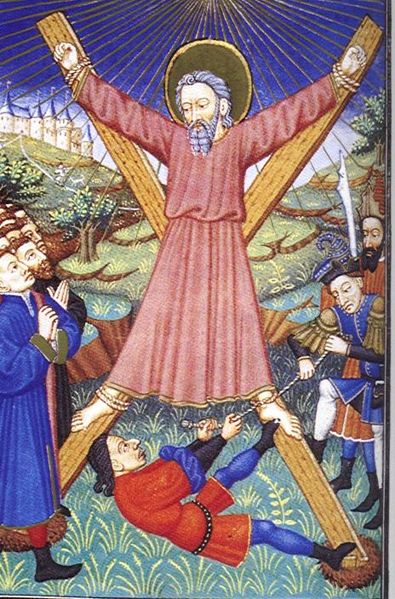
Born in the early 1st century, Andrew was the brother of the saint Simon Paul, son of John. He was first a deciple to John the baptist and then later to Jesus the Messiah. He was closely attached to Jesus. Andrew was the founder and first bishop of The Church of Byzantium and the patron saint of Ireland. Andrew was martyred by crusifiction. Before he died he asked to have the cross turned like an X because he deemed himself unworthy of dieing like Jesus. The Cross of St. Andrew is on on Scottish flag today.

Thursday, January 20, 2011

Most Advanced Civilizations

Thousands of years after the fall of Rome simple peasants in Europe marveled at the complex marble structures dotting the countryside. From 1183 BC to 467 AD Rome was the leading center of civilization in the ancient world. Trade, culture, military power was all concentrated here. Even though only scattered foundations reman of this once mighty empire, we still feel the affects in our daily life.

The Roman Empire was a genius of innovation. Running water, the arch, and cement were only a few of the amazing inventions attributed to the Romans. Running water came in through aqueducts with pipes in the mountains. Public fountains, baths, and even private villas had running water in place. Arches were key to the aqueducts which supplied water.  They made structural shapes impossible before. Bridges, the Colosseum all needed arches. Cement was a strong binding glue that held together everything from houses to the Pantheon.

Many of the ideals of the Romans were taken from Greeks ones. Art, religion, and physiological ideals were all taken and adapted to Roman ones. All the gods were simply renamed and fitted to Roman personalities. Statues were designed in Greek style the Romans came to appreciate beauty through the Greeks.

Future civilizations copied the Roman strengths. The Byzantine Empire used the Roman government format. During the Renaissence there was a revival of the classical period.