Wednesday, August 31, 2011

Renaissance Man

A Renaissance man  "is a cultured man who is knowledgeable,educated, or proficient in a wide range of fields". An example of a Renaissance man would be Leonardo da Vinci. Not only was he a master artist, he painted the Mona Lisa, but da Vinci was also designed flying machines, architecture, studied anatomy, and sang. He was only one of the many Renaissance men who spent their lives mastering a variety of subjects. Michelangelo, Raphael, and Dante are a few examples. The ideal Renaissance man would posses curiosity for the world around him, this would compel him to try new subjects. He would be disciplined and dedicate his time to mastering the skill. Yet he would also be creative in looking at problems from different angles. Designing, painting, and writing all take creativity. Finally, a Renaissance man would be interested in humanism not only religion. Instead of only focusing on God like they did in the Middle Ages, a Renaissance Man would care about human achievement. That would drive him to master the variety of subjects. His devotion to learning would reflect people and the world around him. 


Renaissance men did not emerge until the 1500s because of the mindset and conditions during the Middle Ages. Disease, warfare, and anarchy were widely prevalent, so people put their faith in God that life would be better after death. The Church had a huge impact on everyone's daily lives. It presided over births, deaths, and marriages   Monasteries were the only centers of enlightenment; often monks were the only people who could read. During the Renaissance Church still played a role in people's lives but there was a shift called humanism. This focused on personal achievements and the tangible world. Old texts that the monks had preserved from Greek and Roman times were read again. It was a revival of the classics. With trade and city-states there was enough money to pay artists, philosophers, and poets. Trade with the Middle East brought in new information on technology and science. With money and education it was possible to be a Renaissance man. 

Why do we Study History?

History is the record of past events, cultures, ideas, and places. It is the accumulation of knowledge and evidence from the past that forms the historical record. History is part of our identity, our cultural background that influences our daily lives. "The function off the historian is neither to love the past nor to emancipate himself from the past, but to master and understand it as the key to the understanding of the present."E. H. Carr 


What E.H. Carr, author of What is History? is trying to tell us is that no matter if you love or hate history, it is a necessary tool to understanding the world around us today. History aids us in understanding each other and our differences. By understanding and analyzing the history those different from you, you overcome ignorance and prejudice. Instead of thinking that all Chinese have bound feet, after learning the history of Ancient China you learn that it was a tradition practiced among the elite before it was outlawed by Communism. Without full understanding of one another and our history there is bias and conflict.  By learning history you improve your research skills, your ability to predict and see trends, as well as your thinking skills. 


Not only does history improve your understanding of people around you, but it gives meaning to the world. The present is meaningless without the past. History explains why everything right now is the way it is. It enriches your  knowledge of current events and entertainment. Literature and the media constantly make small references to events or things of the past. Without knowledge of history these details would wash over you. After learning about the Ancient Greeks in Humanities I suddenly noticed all these ways Ancient Greece affects us today, everything from democracy to columns to medicine. I watched modern movies and understood the references to Greek gods. 

Monday, August 29, 2011

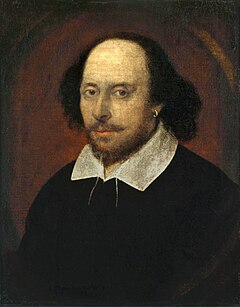
Who was the Real Shakespeare?


Shakespeare, the renowned playwright, poet, and legend is immortalized in his 37 plays and 154 sonnets. No other author has shaped our culture and language like William Shakespeare. Clichés like “in one fell swoop” or “not a mouse stirring” are so common place in conversation or literature that often we do not realize we are uttering Shakespeare’s own words. He changed around the English language to give us the words such as lackluster, madcap, obscene, and multitudes of others. Shakespeare’s characters are mirrors of human nature. From the ridiculous personas of Bottom the Weaver to the incomparable King Lear, Shakespeare has enriched the literary world with personalities that are emulated in multitudes of stories and movies. Yet, despite the enormous impact that Shakespeare has on the modern world, historians question the true authorship of Shakespeare’s works. Evidence from the historical record of clearly establishes that William Shakespeare was no pseudonym or imposter.


To begin with, the name “William Shakespeare” appears on plays and poems attributed to him. William Shakespeare was also an actor at the Globe Theatre and a part owner of the Globe. While some of his early works such as Romeo and Juliet were not published with his name, only a third of the plays published in the 1590s named an author. Plays were not considered proper literature so people did not pay attention to the authors until the 1600s. The First Folio, a collection of Shakespeare’s plays published in 1623, names the collection "The Works of William Shakespeare". There is no historical evidence with any suspicion over who the true author of Shakespeare’s plays was or whether “William Shakespeare” was a pseudonym.


Despite his low birth, events in William Shakespeare’s live clearly point to the fact that he was the true author his plays and sonnets. There are no specific records about Shakespeare’s education but reasonable assumptions can be made from the information available. He attended “petty school” for the basics in reading, writing, and arithmetic. Two years later Shakespeare went to the King Edward IV Grammar School from the ages of seven to fourteen. This would have given him grounding in Latin, Greek, writing, rhetoric and logic. At a young age William Shakespeare began his career as an actor. This would have given him a basis for playwriting because he was already acting in them. Shakespeare later became the father of the twins Hamlet and Judith. The play Hamlet was commemorating his dead son. Numerous passages have the phrase “Farewell, my blessing”. Why would anyone other than Shakespeare write a play about his son? Historians argue about the descriptive references to Italy, a place Shakespeare had never visited. Could he have possible traveled there during the “Lost Years”, ten years where his whereabouts are unknown?