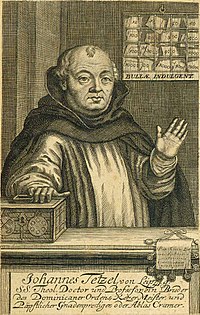
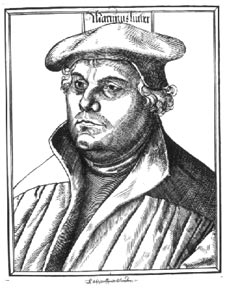
In 1517, a Dominican friar by the name Johann Tetzel was sent by Pope Leo X to preach about the sale of indulgences in order to raise money for Saint Peter's Basilica in Rome. This outrages Martin Luther, an Augustinian monk, who wrote the 95 Theses about why the sale of indulgences was corrupt and immoral. His writings was the spark that lit the bonfire of revolution across Europe. Not only did Luther and Tetzel differ on their views of the sale of indulgences but their ideas of God were very different.
 Johann Tetzel, and Catholics at the time, saw God as being judgement and harsh. You are doomed no matter what you do because it is human nature to sin Tetzel warns by saying that "they are well-nigh numberless, and those that commit them must needs suffer endless punishment in the burning pains of Purgatory" (Tetzel, The Spark of Reformation: Indulgences). He goes on by saying that "for each and every mortal sin it is necessary to undergo seven years of penitence in this life or in Purgatory" (Tetzel, The Spark of Reformation: Indulgences). In essence, Tetzel is preaching that sins are inevitable and God is going to punish you with 7 years in purgatory for each one. This paints a picture of God who is very judgmental and it inspires fear rather than love in the people. How could someone love a God who is going to punish them dearly for every sin they ever commit? By utilizing people's fear of Purgatory and their wish for salvation, the Church was able to manipulate the people into paying for indulgences that fund the Church's own extravagances.
 Martin Luther and the Protestants viewed a loving God and that "to behold God in faith that you should look upon His fatherly, friendly heart, in which there is no anger nor ungraciousness" (Luther, Justification by Faith). At first, Luther saw God as being "just and deals justly in punishing the unjust" (Luther, Justification by Faith). However, after reading Paul's Epistle to the Romans, he came to realize that God granted graciousness and mercy if you are simply faithful. He says that "faith leads you in and opens up God's heart and will, that you should see pure grace and overflowing love" (Luther, Justification by Faith).
Luther is saying that God will love you if you faithful that is the key to salvation, not committing "good acts" such as donating to the Church.
Luther is saying that God will love you if you faithful that is the key to salvation, not committing "good acts" such as donating to the Church.

No comments:
Post a Comment