Thursday, May 19, 2011
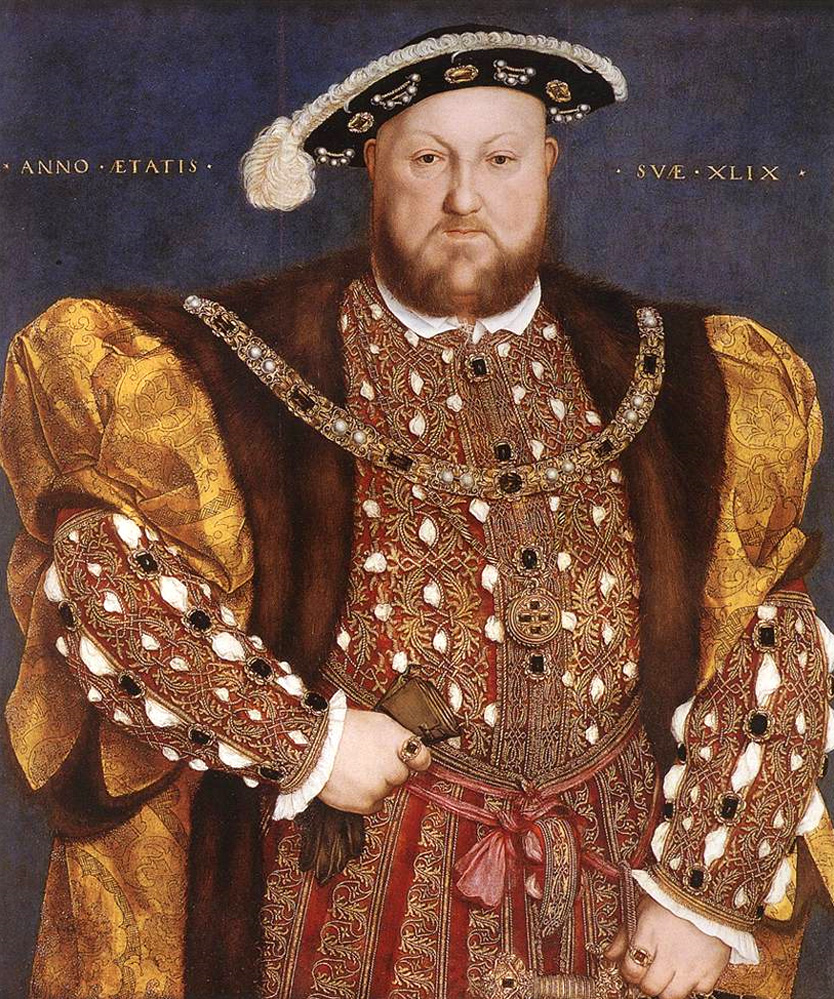
King Henry VIII

Crusades
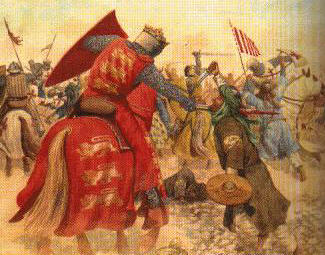
- Pope Urban II
The crusades were military expeditions to reconquer the Holy Land, birthplace and home of Jesus. For 200 years, Christian soldiers and knights were sent to the Middle East. They were called crusaders because of the cross they bore on their shields and shirts. Crusaders fought in the name of God, under orders of Pope Urban II. Why were they fighting?
There were multiple reasons why Pope Urban II ordered an attack on the Holy Land. Pilgrims, from peasants to nobility, had been traveling there for centuries. Arab Muslims had been in control and were moderately welcoming to pilgrims. Then, in 1000 AD the Turks took over. The Turks started to attack pilgrims; finally, they closed the pilgrimage group. The Byzantine Emperor asked Pope Urban II for help against the invading Turks who were attacking his Christian Empire. Pope Urban II accepted, not only so the holy land would be under control of the Christians but also to unite the Christians against the Muslims. Lately, lords had been hiring armies of knights left over from the Viking times. The lords would go to battle against one another by attacking the opposing lord's peasants. If the Crusades succeeded Pope Urban II would gain political power as well. The Christians would also gain control of major trade routes to Asia and Africa.
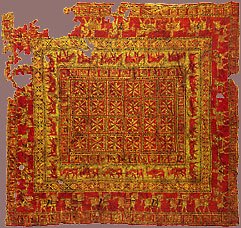
In the end, the Christians did not recapture the Holy Land for long. However, the Crusades enriched and and brought many lasting changes to Europe. After the Crusades, soldiers brought back precious stones, rugs, jewelry, and spices back with them. Soon everyone wanted some of these riches. This increased trade between the Middle East and Europe. It also increased the use of money because it became more practical than barter. New techniques and ideas from the Middle East such as mathematics, medicine, and the sciences. The Crusades helped bring Europe out of the Dark Ages.
Wednesday, May 18, 2011
Feudalism and the Manor System

The Manor system was a way of organizing the economy during the Middle Ages. It consisted of lords and their manors. The lords were usually vassals for a king or more powerful lord. A lord ruled over his manor, collected taxes, was the judge, and oversaw all work done in his fief. Manors were far away each other so that meant they had to be self sufficient. They made their own food, clothings, and other materials. Noblewomen also played an important role in the manor system. Noblewomen were expected to manage the household, medical needs, and supervise servants. When the lord was away she served as the lord of the manor.

Thursday, May 12, 2011
Charlemagne
 |
| Додајте натпис |
In 788 AD, Charlemagne was crowned King of the Franks. His rein of 50 years completely transformed Medieval Europe. Charlemagne conquered weaker kingdoms, expanding his land to the biggest kingdom since the Roman Empire. This spread the Christian religion throughout Europe. He set up schools to promote learning and culture. In a time when only monks could read, Charlemagne took the time to learn. To strengthen the economy, he issued money.
Renaissance Reflection

On Tuesday, May 10th all of 8th grade starred in a Renaissance Faire. It was a collaboration between Art, English, Humanities, and Design Technology. In English class we learned parts from Shakespeare’s A Midsummer Night’s Dream. For humanities we have started the Middle Ages and plan to do a unit on the Renaissance. Ms. Moore also organized the costumes. In art we learned about 1-point perspective while drawing the hallway of a museum filled with artwork from Leonardo da Vinci and Michelangelo. Ms. Jovovic read to us about both of the great artists. In Design Technology we built inventions that da Vinci himself designed. Finally, for Performing Arts we learned to play musical compositions on the recorder from the time.
The Renaissance Faire was a ton of work but in the end it was all worth it. We danced, acted, and played the recorder. My parents really enjoyed it. I think the most difficult was the Shakespeare. It was challenging to memorize all of the complex lines as well as speaking with full volume. If I were to go back and do this project again I would spend more time rehearsing for better facial expressions, projection, and blocking. I do not believe we had enough guidance on the acting. The main focus was the dancing. We learned three dances in total. We were best at dancing. However, the last dance was confusing so we made the most mistakes. Sometimes we would end up without a partner so we would have to dance with someone of the same gender or bow to the center.
In Design Technology Leda and I made a replica helicopter of a design Da Vinci drew. It was meant to fly upwards but our materials were too heavy. It simply twirled while falling. I learned a great deal about Leonardo da Vinci doing this project. His inventions, which were way ahead of his time, fascinate me especially his “robot”. Due to a combination of absenseses and lack of practice our recorder performance was not at its best. Bakic, Anze, and I had to perform one song alone because the rest of the class was not ready. If we were to do this again maybe we could figure out a way to improve. Overall, I really enjoyed the Renaissance Faire, we put it a lot of effort and did a great job.
The Renaissance Faire was a ton of work but in the end it was all worth it. We danced, acted, and played the recorder. My parents really enjoyed it. I think the most difficult was the Shakespeare. It was challenging to memorize all of the complex lines as well as speaking with full volume. If I were to go back and do this project again I would spend more time rehearsing for better facial expressions, projection, and blocking. I do not believe we had enough guidance on the acting. The main focus was the dancing. We learned three dances in total. We were best at dancing. However, the last dance was confusing so we made the most mistakes. Sometimes we would end up without a partner so we would have to dance with someone of the same gender or bow to the center.
In Design Technology Leda and I made a replica helicopter of a design Da Vinci drew. It was meant to fly upwards but our materials were too heavy. It simply twirled while falling. I learned a great deal about Leonardo da Vinci doing this project. His inventions, which were way ahead of his time, fascinate me especially his “robot”. Due to a combination of absenseses and lack of practice our recorder performance was not at its best. Bakic, Anze, and I had to perform one song alone because the rest of the class was not ready. If we were to do this again maybe we could figure out a way to improve. Overall, I really enjoyed the Renaissance Faire, we put it a lot of effort and did a great job.
Subscribe to:
Comments (Atom)