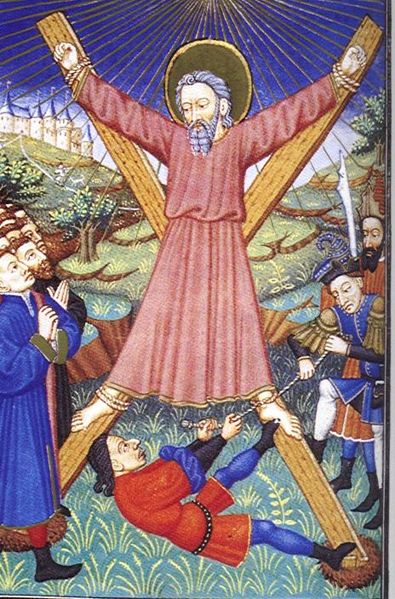
 Born in the early 1st century, Andrew was the brother of the saint Simon Paul, son of John. He was first a deciple to John the baptist and then later to Jesus the Messiah. He was closely attached to Jesus. Andrew was the founder and first bishop of The Church of Byzantium and the patron saint of Ireland. Andrew was martyred by crusifiction. Before he died he asked to have the cross turned like an X because he deemed himself unworthy of dieing like Jesus. The Cross of St. Andrew is on on Scottish flag today.
Wednesday, January 26, 2011
Eastern Orthodox Saint: Andrew
Born in the early 1st century, Andrew was the brother of the saint Simon Paul, son of John. He was first a deciple to John the baptist and then later to Jesus the Messiah. He was closely attached to Jesus. Andrew was the founder and first bishop of The Church of Byzantium and the patron saint of Ireland. Andrew was martyred by crusifiction. Before he died he asked to have the cross turned like an X because he deemed himself unworthy of dieing like Jesus. The Cross of St. Andrew is on on Scottish flag today.
Thursday, January 20, 2011
Most Advanced Civilizations
Thousands of years after the fall of Rome simple peasants in Europe marveled at the complex marble structures dotting the countryside. From 1183 BC to 467 AD Rome was the leading center of civilization in the ancient world. Trade, culture, military power was all concentrated here. Even though only scattered foundations reman of this once mighty empire, we still feel the affects in our daily life.
The Roman Empire was a genius of innovation. Running water, the arch, and cement were only a few of the amazing inventions attributed to the Romans. Running water came in through aqueducts with pipes in the mountains. Public fountains, baths, and even private villas had running water in place. Arches were key to the aqueducts which supplied water. They made structural shapes impossible before. Bridges, the Colosseum all needed arches. Cement was a strong binding glue that held together everything from houses to the Pantheon.
Many of the ideals of the Romans were taken from Greeks ones. Art, religion, and physiological ideals were all taken and adapted to Roman ones. All the gods were simply renamed and fitted to Roman personalities. Statues were designed in Greek style the Romans came to appreciate beauty through the Greeks.
Future civilizations copied the Roman strengths. The Byzantine Empire used the Roman government format. During the Renaissence there was a revival of the classical period.
The Roman Empire was a genius of innovation. Running water, the arch, and cement were only a few of the amazing inventions attributed to the Romans. Running water came in through aqueducts with pipes in the mountains. Public fountains, baths, and even private villas had running water in place. Arches were key to the aqueducts which supplied water. They made structural shapes impossible before. Bridges, the Colosseum all needed arches. Cement was a strong binding glue that held together everything from houses to the Pantheon.
Many of the ideals of the Romans were taken from Greeks ones. Art, religion, and physiological ideals were all taken and adapted to Roman ones. All the gods were simply renamed and fitted to Roman personalities. Statues were designed in Greek style the Romans came to appreciate beauty through the Greeks.
Future civilizations copied the Roman strengths. The Byzantine Empire used the Roman government format. During the Renaissence there was a revival of the classical period.
Subscribe to:
Comments (Atom)