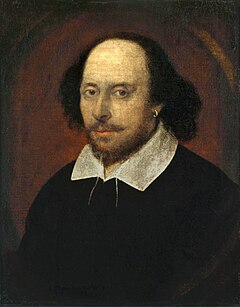
To begin with, the name “William Shakespeare” appears on plays and poems attributed to him. William Shakespeare was also an actor at the Globe Theatre and a part owner of the Globe. While some of his early works such as Romeo and Juliet were not published with his name, only a third of the plays published in the 1590s named an author. Plays were not considered proper literature so people did not pay attention to the authors until the 1600s. The First Folio, a collection of Shakespeare’s plays published in 1623, names the collection "The Works of William Shakespeare". There is no historical evidence with any suspicion over who the true author of Shakespeare’s plays was or whether “William Shakespeare” was a pseudonym.
Despite his low birth, events in William Shakespeare’s live clearly point to the fact that he was the true author his plays and sonnets. There are no specific records about Shakespeare’s education but reasonable assumptions can be made from the information available. He attended “petty school” for the basics in reading, writing, and arithmetic. Two years later Shakespeare went to the King Edward IV Grammar School from the ages of seven to fourteen. This would have given him grounding in Latin, Greek, writing, rhetoric and logic. At a young age William Shakespeare began his career as an actor. This would have given him a basis for playwriting because he was already acting in them. Shakespeare later became the father of the twins Hamlet and Judith. The play Hamlet was commemorating his dead son. Numerous passages have the phrase “Farewell, my blessing”. Why would anyone other than Shakespeare write a play about his son? Historians argue about the descriptive references to Italy, a place Shakespeare had never visited. Could he have possible traveled there during the “Lost Years”, ten years where his whereabouts are unknown?

No comments:
Post a Comment