- Pope Urban II
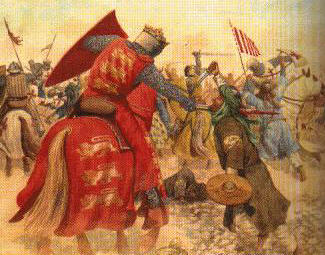
The crusades were military expeditions to reconquer the Holy Land, birthplace and home of Jesus. For 200 years, Christian soldiers and knights were sent to the Middle East. They were called crusaders because of the cross they bore on their shields and shirts. Crusaders fought in the name of God, under orders of Pope Urban II. Why were they fighting?
There were multiple reasons why Pope Urban II ordered an attack on the Holy Land. Pilgrims, from peasants to nobility, had been traveling there for centuries. Arab Muslims had been in control and were moderately welcoming to pilgrims. Then, in 1000 AD the Turks took over. The Turks started to attack pilgrims; finally, they closed the pilgrimage group. The Byzantine Emperor asked Pope Urban II for help against the invading Turks who were attacking his Christian Empire. Pope Urban II accepted, not only so the holy land would be under control of the Christians but also to unite the Christians against the Muslims. Lately, lords had been hiring armies of knights left over from the Viking times. The lords would go to battle against one another by attacking the opposing lord's peasants. If the Crusades succeeded Pope Urban II would gain political power as well. The Christians would also gain control of major trade routes to Asia and Africa.
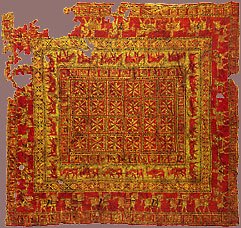
In the end, the Christians did not recapture the Holy Land for long. However, the Crusades enriched and and brought many lasting changes to Europe. After the Crusades, soldiers brought back precious stones, rugs, jewelry, and spices back with them. Soon everyone wanted some of these riches. This increased trade between the Middle East and Europe. It also increased the use of money because it became more practical than barter. New techniques and ideas from the Middle East such as mathematics, medicine, and the sciences. The Crusades helped bring Europe out of the Dark Ages.

No comments:
Post a Comment